Generative engine optimization vs answer engine optimization has a clear verdict from me: GEO wins on 2026 payoff and evidence, AEO wins on clarity and ease of measurement, and the smart move is to run both as one job.
AEO is the older term for getting your page picked as the direct answer, and GEO is the newer term for getting your brand cited inside answers that AI writes from many sources.
I scored the two terms over six rounds, and every score below is my own opinion, which I explain round by round.
The scores are not a ranking of tools or agencies, because neither GEO nor AEO is a product.
They're a way to judge which idea deserves more of your time and money right now.
If you want my team to score your own site instead, book my free one-to-one GEO, AEO AI audit and get a custom game plan.
The Scores At A Glance
This table shows how I scored the two terms out of 10 in each round, and it's my opinion rather than a measured benchmark.
| Round | Answer engine optimisation (AEO) | Generative engine optimisation (GEO) | Round winner |
|---|---|---|---|
| 1. Origin and research backing | 5 | 9 | GEO wins because it has a named research paper behind it. |
| 2. Clarity of the idea | 9 | 7 | AEO wins because "be the direct answer" is easy to grasp. |
| 3. Relevance in 2026 | 7 | 9 | GEO wins because AI-written answers are where attention is moving. |
| 4. Ease of measurement | 8 | 5 | AEO wins because a snippet is visible and stable enough to check. |
| 5. Effort to win | 7 | 5 | AEO wins because format changes are quicker than earning trust across the web. |
| 6. Size of the payoff | 6 | 9 | GEO wins because being one of a few named businesses is worth more. |
| Overall verdict | 7.0 | 7.3 | GEO edges it, but the real win is running both together. |
The overall numbers are simple averages of my six round scores.
The gap is small on purpose, because these two ideas share most of their foundations.
🔥 Want my exact Generative Engine vs Answer Engine Optimization setup, step by step? Inside the AI Profit Boardroom you get step-by-step video trainings, my installable Agent OS and four coaching calls a week with 3,400+ members building real automations. → Join the AI Profit Boardroom
How I Scored The Two Terms
I judged each term as an idea you'd spend time and budget on, not as a piece of software.
I gave higher scores for clear origins, real evidence, relevance to how people search today, how easy the results are to check, how fast you can make progress and how big the reward is.
I used three kinds of sources, which were the GEO research paper, Google's own documentation and what I show on my own screens in two videos.
Where I couldn't verify something, such as who first coined "AEO", I left it out instead of guessing.
Round 1: Origin And Research Backing
GEO has a clear birth certificate, and AEO doesn't.
The GEO name comes from GEO: Generative Engine Optimization by Pranjal Aggarwal, Vishvak Murahari, Tanmay Rajpurohit, Ashwin Kalyan, Karthik Narasimhan and Ameet Deshpande.
It was first posted on arXiv on 16 November 2023, and the arXiv page says it was accepted to KDD 2024.
The authors built a benchmark called GEO-bench and reported visibility gains of up to 40% in generative engine responses.
AEO grew up in the featured snippet and voice assistant era, and I couldn't find one reliable source for exactly who named it or when.
That's not a knock on the idea, but it does mean AEO is a practitioner label rather than a defined research term.
My score for this round is 9 for GEO and 5 for AEO.
Round 2: Clarity Of The Idea
AEO wins clarity easily, because "be the direct answer" is something anyone understands.
Google's featured snippets documentation describes those boxes as results where the descriptive snippet shows first, and that's exactly the target.
Voice made the idea even clearer, and Google still documents speakable structured data as a beta feature for Google Assistant to read news sections aloud.
GEO is a little fuzzier, because "being visible in a generated answer" can mean being named, being cited, being quoted or being described accurately.
I explain GEO as being the name the AI gives when someone asks a question, which helps, but it still covers more ground.
My score for this round is 9 for AEO and 7 for GEO.
Round 3: Relevance In 2026
GEO takes this round, because AI-written answers are showing up everywhere people search.
Google's AI features and your website page explains that AI Overviews and AI Mode may use a "query fan-out" technique, which means running several related searches to build one response.
That's a generative engine in exactly the sense the GEO paper describes.
Featured snippets still exist, so AEO hasn't gone away, and its answer-first page structure is the same one AI answers love to quote.
My score for this round is 9 for GEO and 7 for AEO.
📞 Want your own site scored on both jobs? Book a free AEO SEO strategy session and my team will look at where you're closest to winning answer boxes and AI mentions. → Get your custom game plan for Google and AI search
Round 4: Ease Of Measurement
AEO is far easier to measure, because you can see whether you hold the snippet.
GEO is harder, because AI answers change between runs, between tools and between days.
Google says traffic from AI Overviews and AI Mode is counted inside the normal Search Console performance report under the "Web" search type, so you can't split it out cleanly there.
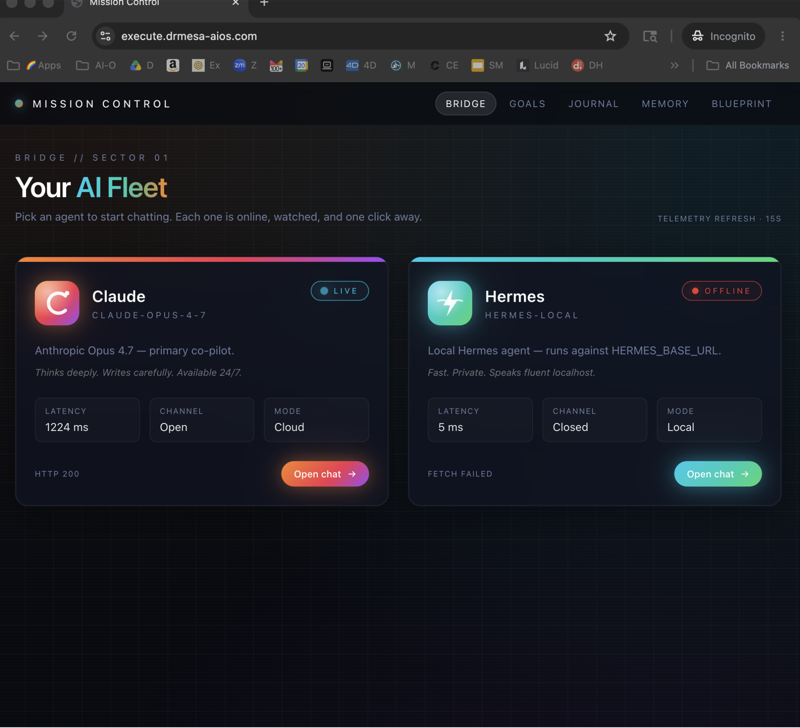
In my Hermes GEO video I make the same point, which is that Google and the AI engines don't yet report AI traffic well.
The workaround is a fixed list of buyer prompts that you re-run and log every couple of weeks.
Paid trackers exist too, such as Ahrefs Brand Radar and the Semrush AI Visibility Toolkit, but I'd start with a manual log before paying for anything.
My score for this round is 8 for AEO and 5 for GEO.
Round 5: Effort To Win
AEO usually moves faster, because much of it is page format.
You can rewrite a page so the answer sits in the first two lines, add a clean list or table, and see whether the box changes.
GEO takes more effort, because the AI blends many sources and looks for agreement across the web.
The GEO paper's best methods were citing sources, adding quotations and adding statistics, which gave a 30% to 40% relative improvement on its position-adjusted word count measure.
Those changes are on-page, but being named consistently also needs other sites to describe you the same way, and that takes longer.
The paper also found keyword stuffing didn't help, so the shortcuts from old SEO won't save you here.
My score for this round is 7 for AEO and 5 for GEO.
🚀 Ready to put Generative Engine vs Answer Engine Optimization to work in your business? Inside the AI Profit Boardroom you get step-by-step video trainings, my installable Agent OS and four coaching calls a week with 3,400+ members building real automations. → Join the AI Profit Boardroom
Round 6: Size Of The Payoff
GEO wins the payoff round, because an AI answer gives out very few spots.
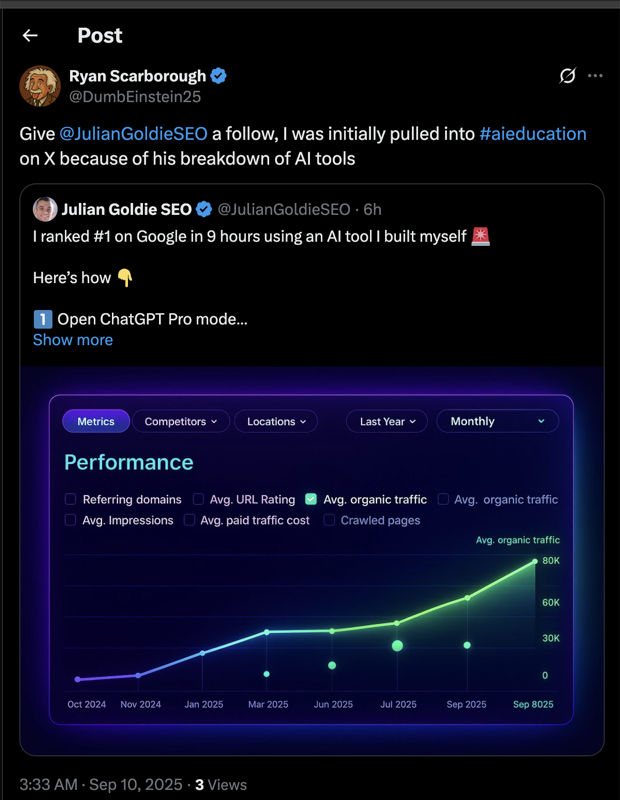
In my GEO examples video, Google's AI Overview for "best geo expert" names me first and cites several of my pages.
In my Hermes GEO video, AI Mode lists me first when asked for the best GEO experts to follow in 2026 and links to my sites.
One of my sites went from zero to more than 1,300 clicks a day, and two other sites are on the same path.
Those are my results from my own screens, not a promise for yours.
A featured snippet is still valuable, but it sits above normal results rather than replacing them.
My score for this round is 9 for GEO and 6 for AEO.
Here's the second video, where I walk through four GEO examples from my own screens.
Where The Two Terms Overlap
The scores split the two terms, but most of the work underneath is identical.
| Shared foundation | Why it helps AEO | Why it helps GEO |
|---|---|---|
| Crawlable, indexed pages with snippets allowed | The engine can't box a page it can't show. | Google says a page must be indexed and snippet-eligible to be a supporting link in AI features. |
| An answer in the first two lines | It gives the engine a clean answer to lift. | It gives the AI a clear claim to quote. |
| Real case studies and numbers | They make the answer more useful than a generic one. | They give the AI something unique that only you can supply. |
| Consistent business facts everywhere | They stop mixed signals about who you are. | They create the agreement across sites that AI answers repeat. |
| A human fact-check before publishing | It stops a wrong answer getting boxed. | It stops a wrong fact getting repeated in AI answers. |
Google's AI features page also says there are no additional requirements, no special schema and no AI text files needed for AI Overviews or AI Mode.
So neither job depends on a secret trick, and both depend on good pages.
Pros And Cons Of Each Term
These lists sum up the strengths and weaknesses I found in each round.
Answer engine optimisation pros and cons
- It's easy to explain to a client or a boss in one sentence.
- It's easy to check, because you can see the answer box yourself.
- It moves quickly, because format fixes are fast to ship.
- It has no single agreed origin, which makes it a looser label.
- Its payoff is smaller on its own, because a snippet doesn't replace the results below it.
Generative engine optimisation pros and cons
- It has a named research paper with published findings behind it.
- It targets the AI answers where attention is moving in 2026.
- Its payoff is bigger, because AI answers name very few businesses.
- It's harder to measure, because AI answers change between runs and tools.
- It takes more effort, because you need agreement across other sites, not just a good page.
📞 Want a plan that covers both rounds you're losing? Grab my free one-to-one GEO, AEO AI audit and leave with a custom game plan built around the keywords you're closest to winning. → Book the free call
How To Act On This Verdict
This is the order I'd follow if I were starting today.
- Fix the shared foundations first, because they help both scores at once.
- Rewrite your most important pages so the answer sits in the first two lines, which is the quick AEO win.
- Add a real case study, cited sources and real numbers to each of those pages, which is the GEO layer.
- Repeat your core business facts on other sites and platforms you control, each with a different angle.
- Build a fixed prompt list and log the results every two weeks, which fixes GEO's measurement weakness.
- Fact-check every page by hand before it goes live, in line with Google's 1 October 2026 advice that it's "critical to manually factcheck" AI content.
Red Flags In GEO And AEO Offers
These are the warning signs I'd score as an instant fail, whichever term a provider uses.
- Any guarantee of a spot in AI answers is a red flag, because nobody controls them.
- Any pitch built on special AI files or secret schema ignores Google's own guidance.
- Any plan that stuffs keywords ignores what the GEO paper found.
- Any provider who can't show a real case study isn't testing anything.
Final Verdict
GEO edges the overall score at 7.3 against 7.0 for AEO in my opinion, mostly because the payoff and the research backing are stronger.
AEO still earns its place, because its answer-first format is the base layer that GEO builds on.
If you only remember one thing, remember that one well-built page can win both.
Related Reading
- My shorter take on generative engine optimization vs AEO, with a tactics table.
- My review of free GEO audits and what they really check.
- Four GEO examples rated for how repeatable they are.
Also On Our Network
- 🌐 An eight-step operator plan for both jobs
- 🌐 What GEO and AEO mean for clients and agencies
- 🌐 A quick-start loop for GEO and AEO inside an Agent OS
- 🌐 How the models behind AI answers score
FAQ: Generative Engine Optimization vs Answer Engine Optimization, Scored
Which wins, generative engine optimization or answer engine optimization?
In my scoring, GEO wins on payoff and research backing, while AEO wins on clarity and ease of measurement.
My verdict is to run them as one job, because the same pages win both.
Is there research behind generative engine optimization?
Yes, the paper "GEO: Generative Engine Optimization" by Pranjal Aggarwal and colleagues was posted on arXiv on 16 November 2023 and accepted to KDD 2024.
It reported visibility gains of up to 40% in generative engine responses.
Is there an official definition of answer engine optimization?
I couldn't find one agreed origin for the term.
It's best described as the featured snippet and voice assistant era term for getting your page chosen as the direct answer.
Which is easier to measure, GEO or AEO?
AEO is easier, because you can see whether you hold a featured snippet.
GEO answers change between runs and tools, so you need a fixed prompt list and a log.
Does Google need special markup for AI Overviews?
No, Google says there are no additional requirements, no special schema and no AI text files.
A page does need to be indexed and eligible to show in Search with a snippet.
Is the free strategy session a written score report?
No, it's a free one-to-one call rather than a written report.
My team looks at your site, your competitors and the keywords you're closest to winning, then gives you a custom game plan.
📺 Video notes + links to the tools 👉
🎥 Learn how I make these videos 👉
🆓 Get a FREE AI Course + Community + 1,000 AI Agents 👉
About Julian
I'm Julian Goldie, an SEO entrepreneur, author and founder of the AI Profit Boardroom, which has 3,400+ members and four coaching calls a week.
I help business owners scale with AI agents, automation and SEO.
- I started Goldie Agency on my own, and it is now a 7-figure SEO and link-building agency with 70+ people.
- I've grown my YouTube channel to 400,000+ subscribers.
- I wrote "Link Building Mastery".
- My Udemy courses have taught 29,000+ students.
→ Get my best AI training inside the AI Profit Boardroom
Fix the shared foundations, book a free strategy session if you want your own scores, and you'll have the final word on generative engine optimization vs answer engine optimization for your own site.