Google Harness2, written Harness² or Harness Squared, is a free, open-source research framework from Google Research, and my verdict is that it is the most convincing proof yet that fixing an agent's setup can beat buying a bigger model.
It lives at google-research/harness2 on GitHub under the Apache-2.0 licence, so the code costs nothing.
It works by letting an agent attempt a task, proposing edits to the agent's harness, testing those edits on the same task, and composing the winners into a better harness.
It then stores the lessons in an improvement harness, so future tasks get smarter edits, and the model weights never change.
In the paper, one step lifted GLM-5 and Gemini 3.5 Flash by up to 11.5 points on WorkBuddy-Bench, 4.5 points on JobBench and 11.8 percentage points on LAB's partial pass rate.
I didn't run it myself in my video, so every score below is my judgement of what the paper, the README and the project page show.
If you want my team to look at how AI agents and AI search can grow your business, book a free one-to-one GEO, AEO AI audit.
The Google Harness2 Verdict In One Table
These are my scores out of 5, based on the official paper, README and project page rather than my own run.
| Feature | Score | Why it got that score |
|---|---|---|
| Propose, Probe, Compose | 5/5 | It improves a harness on a brand-new task without needing an answer key. |
| Improvement harness | 4.5/5 | It carries adopted harnesses and evidence-supported lessons into future tasks. |
| Eight editable components | 5/5 | It can change far more than a prompt, from memory and skills to subagents and plugins. |
| Parallel and sequential recursion | 4.5/5 | You can explore wider or refine deeper, and bigger budgets brought further gains. |
| Executors | 4/5 | It supports OpenCode by default and Codex as an option, but nothing else yet. |
| Built-in benchmarks | 4/5 | JobBench, LAB and WorkBuddy-Bench cover real professional work. |
| Free local demo | 5/5 | You can watch both recursion modes run with no model credentials. |
| Ease of setup | 2/5 | It needs Linux, Python 3.12, uv, Node.js 20+ and the Google Cloud CLI. |
| Running cost | 2.5/5 | Every probe is a full run, and the README warns about API costs. |
| Safety defaults | 2/5 | Executor network access is unrestricted and Codex runs with its sandbox disabled. |
| Overall | 4/5 | It is an excellent free research tool and a weak fit for non-coders today. |
🔥 Want my exact Google Harness2 setup, step by step? Inside the AI Profit Boardroom you get step-by-step video trainings, my installable Agent OS and four coaching calls a week with 3,400+ members building real automations. → Join the AI Profit Boardroom
What Google Harness2 Is
The README defines a harness as the system around a model that lets it act as an agent, which includes prompts, tools, memory, skills and orchestration.
Harnessing is the job of optimising that system.
Harness² makes harnessing recursive, so the harness keeps improving and the process that improves it keeps improving too.
I use a kitchen to explain it in my video.
The model is the chef, and the harness is the kitchen, with the recipes on the wall, the rules, the memory, the tools, the skills and the helpers.
A great chef in a messy kitchen still serves bad food.
| Fact | Detail |
|---|---|
| Paper | The paper is "Harness^2: Recursive Agent Harnessing for an Open World", arXiv 2610.14224, submitted on 9 October 2026. |
| Authors | Ruiyao Xu of Northwestern University and a Google Cloud AI Research team including Tomas Pfister wrote it. |
| Licence | The code is released under Apache-2.0. |
| Version | The pyproject file lists version 0.1.0. |
| Repo stats | The repo was created on 6 October 2026 and passed 16,000 stars and 1,500 forks by 21 October, and it is still climbing. |
| Status | The README says it is not an officially supported Google product. |
How To Install Google Harness2
The README says to use Linux, Python 3.12 and uv, and to run these commands from the repository root.
uv venv --python 3.12 .venv
source .venv/bin/activate
uv pip install -e '.[render]'
harness2-demo --output runs/demo --k 2
The demo runs both recursion modes with deterministic editors and real Python executions, and it needs no model credentials.
For model-backed benchmarks, the README asks for Node.js 20+, the Google Cloud CLI and the benchmark dependencies, with Pandoc and Poppler for LAB and Docker for WorkBuddy-Bench.
cp .env.example .env
# Edit .env with your Vertex AI project and model IDs.
gcloud auth application-default login
Then the README's example installs LAB and runs one task end to end.
harness2-setup lab
harness2-check --bench lab
harness2 --bench lab --k 1 --mode parallel \
  --only-domains antitrust-competition --max-tasks 1
harness2-judge --bench lab --k 1 --mode parallel
harness2-report --bench lab --k 1 --mode parallel
If you want my team to look at where agents and AI search fit your business, grab a free strategy session and we'll look at your site, your competitors and the keywords you're closest to winning.
Feature By Feature: Google Harness2 Reviewed
Propose, Probe, Compose — 5/5
This is the core of task-level recursion.
A harness editor proposes general "invariant" edits and domain-specific edits, candidate probes run them on the same task, and a harness composer builds the final harness from the contrasts between the runs.
The paper says this guides edits without ground-truth verifiers, which matters because real tasks don't come with answer keys.
I explained it in my video with routes to the gym, because you can compare two routes and pick the faster one without anyone telling you the answer.
The Improvement Harness — 4.5/5
This is harnessing-level recursion.
An experience reflector looks at the full step and updates a persistent improvement harness with the adopted harnesses and evidence-supported lessons.
The project page shows the improvement library as harness files plus an EXPERIENCE.md file, and each new task resets the executor to the base harness.
I took half a point off because the benefit over long task streams is still early research.
Eight Editable Components — 5/5
The README lists eight components it can edit.
| Component | Runtime role |
|---|---|
| System prompt | It constructs context by setting the persona and top-level procedure. |
| Guardrails | It constructs context by setting the rules. |
| Memory | It constructs context from what the agent should remember. |
| Skills | It constructs context from reusable how-to files. |
| Tool guidance | It defines the tool interface by explaining how to use tools. |
| Scripts | It defines the tool interface with code the agent can call. |
| Subagents | It orchestrates delegated work. |
| Plugins | It controls middleware in the tool loop. |
The project page puts it well, because improvement can change more than a prompt.
Parallel And Sequential Recursion — 4.5/5
The --k flag sets the task-level recursion budget.
Parallel mode probes K general and K domain-specific candidates and then produces K compositions.
Sequential mode carries the refined harness through K successive Propose, Probe, Compose steps.
The README says parallel explores wider while sequential refines deeper, and in my video I used a budget of 3 as the example.
The project page shows Gemini 3.5 Flash on OpenCode going from 72.4 to 77.5 on WorkBuddy with one step, and to 80.8 with parallel recursion at k = 5.
Executors: OpenCode And Codex — 4/5
OpenCode is the default executor, and --substrate cx switches to Codex.
OpenCode is a sensible default, and it already runs inside my own Agent OS with MiniMax M3.1 Flash.
I scored it 4 because there is no support yet for other agents.
Built-In Benchmarks — 4/5
JobBench covers professional work and installs with harness2-setup jb.
LAB covers legal work and installs with harness2-setup lab.
WorkBuddy-Bench covers office, web and code tasks, installs with harness2-setup wb, and takes --subset office, --subset web or --subset code.
🔥 Want my full agent setup, harness and all? Inside the AI Profit Boardroom, I've got the installable Agent OS plus step-by-step tutorials on agent instructions, memory and skills, which are the parts Harness² edits. You'll be learning alongside 3,400+ members with four coaching calls every week. → Get access here
Results, Resume And Dry Runs — 4.5/5
Results are saved under runs/ with task summaries, deliverables, adopted harnesses, reflection notes and evaluation results.
You resume a stopped run by repeating the same command.
The --dry-run flag previews task selection without model calls, which is a smart way to avoid surprise bills.
The README warns that judging and reporting must use the same benchmark, executor, subset, --k, --mode and seed as the refinement run.
Setup, Cost And Safety — 2/5 Overall
This is where it loses points for most people.
It needs Linux, Python 3.12, uv, Node.js 20+ and the Google Cloud CLI, so it is not a no-code tool.
Model-backed runs incur API costs, and every probe is a full run of the task.
The README says executor network access is unrestricted and Codex runs with its sandbox disabled, and it tells you to configure network restrictions before evaluation so the agent can't reach benchmark answers.
Google Harness2 vs Everyday Agent Harnesses
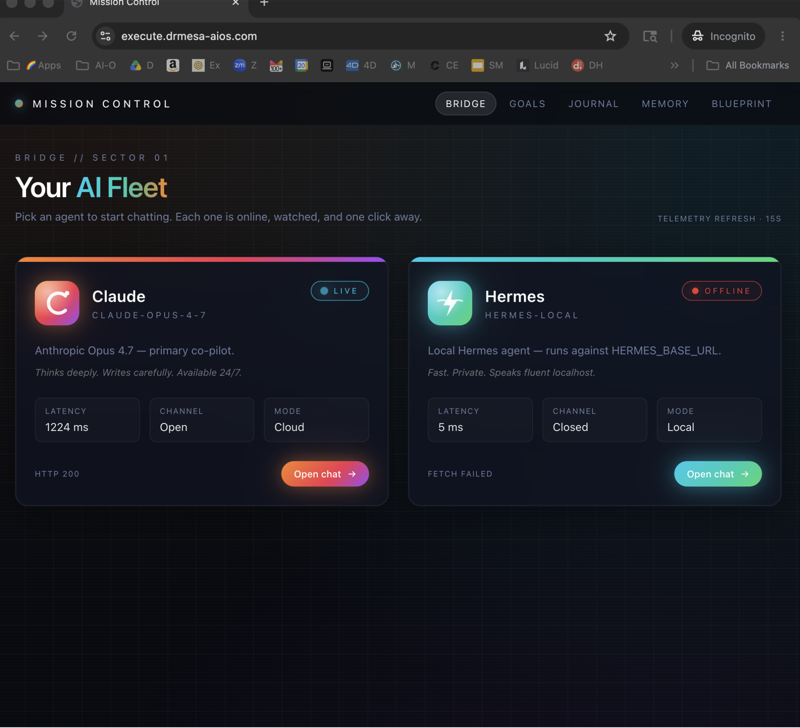
A viewer commented that Harness² is "Hermes redone basically", and it's a fair question.
Hermes Agent has skills and memory that you can edit yourself.
Harness² is different because it is a research framework that automates those edits for OpenCode or Codex executors and checks them against benchmarks.
| Question | Harness² | An everyday agent like Hermes |
|---|---|---|
| What is it for? | It is for automatically improving and measuring an agent's harness. | It is for doing your daily tasks. |
| Who edits the harness? | Harness² proposes, probes and composes the edits itself. | You or the agent edit skills and memory as you work. |
| What does it run on? | It runs OpenCode by default or Codex. | It runs on the model you choose. |
| How hard is setup? | It needs Linux, Python, Node and the Google Cloud CLI. | Setup is usually much simpler. |
If you want a free, local harness you can use day to day, this StarNet video is a good comparison point.
My full StarNet AI agent breakdown goes deeper, and my DeepSeek Harness review covers another harness built for coding agents.
Limits And What It Doesn't Do
It doesn't retrain or fine-tune the model, because the weights stay fixed.
It doesn't give you a chat app or a daily assistant, because it is a research framework.
The README asks for Linux, so Windows and Mac users should plan on a Linux machine or server.
It isn't an official Google product, and the README says it is not eligible for Google's open-source vulnerability rewards programme.
It is version 0.1.0, so expect changes.
An engineer called Ash Pachar, who used to work at Lightning AI, made a point I paraphrased in my video, which is that a person usually designs the harness once and leaves it.
Harness² is the strongest answer I've seen to that problem.
If you would rather have my team map out how your business can win in Google and AI search, book a free SEO strategy session and we will build the plan with you.
🔥 Want to ask me how I'd fix your agent's setup? The AI Profit Boardroom has the Agent OS, the skills and memory training, and four weekly coaching calls where you can bring your setup and get a straight answer. → Join the AI Profit Boardroom
Who Should Use It
Researchers and engineers who benchmark agents should install it now.
Teams running OpenCode or Codex agents on professional work should run the demo and one small task.
Non-technical business owners should take the lesson and skip the install for now.
In my Agent OS, Claude, Hermes, OpenClaw and OpenCode share one memory in Obsidian, and most fixes come from the setup, such as a skill file with a bad rule, a missing memory note or vague instructions.
You can improve those parts by hand today, and my best Hermes Agent setup guide shows you how.
Final Verdict
Harness² scores 4 out of 5 from me as a free research tool, based on the paper, README and project page.
The idea is excellent, the reported gains are real numbers from the paper, and the eight-component harness is the clearest map of an agent setup I've seen.
The setup, the running cost and the open network access keep it out of reach for most non-coders today.
Related Reading
- My StarNet AI agent breakdown covers a free local agent harness you can use every day.
- My DeepSeek Harness review scores another harness built for coding agents.
- My best Hermes Agent setup guide shows how to tune your agent's harness by hand.
Also On Our Network
- 🌐 How to install Harness² in five steps
- 🌐 Seven ways a business can use Harness² and its lessons
- 🌐 A Harness² quick start for Agent OS users
- 🌐 GLM and Gemini Flash scores next to the Harness² paper
FAQ: Google Harness2 Verdict
Is Google Harness2 worth using?
For researchers and engineers who benchmark OpenCode or Codex agents, yes, because it is free and the paper reports clear gains without changing the model.
For non-technical business owners, the lesson is more useful than the install.
What are the eight parts Harness² can edit?
The README lists system prompt, guardrails, memory, tool guidance, subagents, skills, scripts and plugins.
They control context construction, the tool interface, delegation and behaviour inside the tool loop.
Is Harness² just Hermes Agent redone?
No, because Hermes Agent is an everyday agent whose skills and memory you edit yourself.
Harness² automatically proposes, tests and composes harness edits for OpenCode or Codex executors and measures them on benchmarks.
What are the biggest downsides of Harness²?
It costs more to run, it is an early research release at version 0.1.0, it is technical to set up, and executor network access is unrestricted.
It is also not an officially supported Google product.
Does Harness² change the model?
No, it keeps the model weights fixed and only edits the harness around the model.
If you'd like my team to look at how AI agents and content can win your business Google and AI search traffic, book your free SEO strategy session here.
📺 Video notes + links to the tools 👉
🎥 Learn how I make these videos 👉
🆓 Get a FREE AI Course + Community + 1,000 AI Agents 👉
About Julian
I'm Julian Goldie, an SEO entrepreneur, author and founder of the AI Profit Boardroom, which has 3,400+ members.
I help business owners scale with AI agents, automation and SEO.
- I've built a 7-figure SEO and link-building agency, Goldie Agency, with 70+ people in Bangkok.
- I've grown a YouTube channel to 400,000+ subscribers.
- I wrote the book "Link Building Mastery", which covers nine link building strategies.
- I run GoldieBench, where I score AI models on real one-shot builds.
→ Get my best AI training inside the AI Profit Boardroom
Run the free demo before you spend a penny on API calls, and you'll see for yourself why I rate Google Harness2 so highly.